The creative space: Inside Luboš Volkov’s new home office
Renowned Czech designer Luboš Volkov opens the doors to his new home studio a space that mirrors his personality, values, and creative philosophy. In this interview, he discusses moving away from sterile minimalism, how books fuel his creativity, and why he believes a workspace should feel 'lived-in.' His approach is a call to find authenticity, not just in design, but in our everyday working environments.
Your new workspace feels much more personal than the previous one. What led you to leave "sterile minimalism" behind?
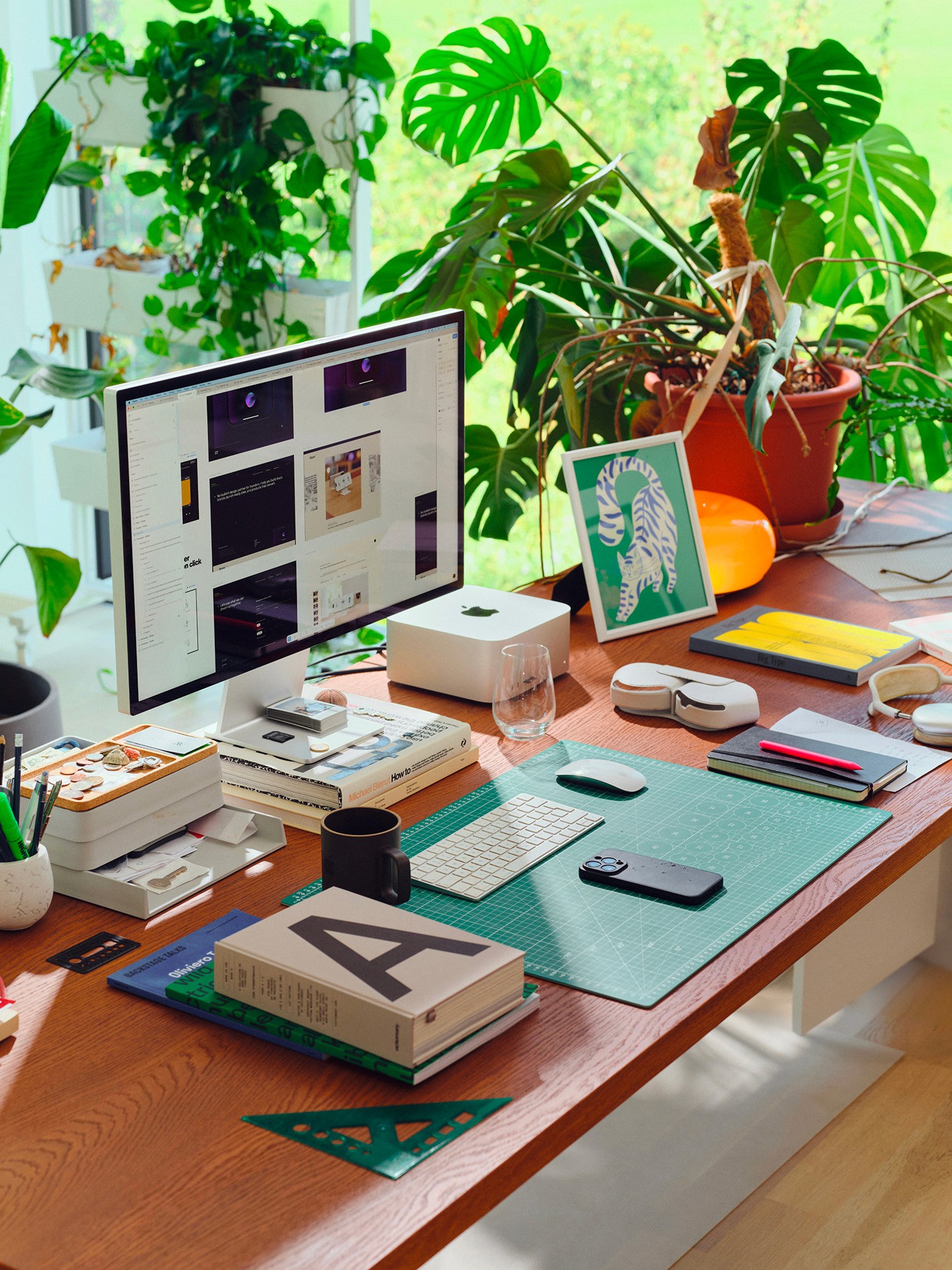
The first one I had or rather, one of the first ones that got more visibility was all white, clean, almost sterile. It looked incredibly polished, nearly surreal, which was actually the truth. It only looked that way in photos; in reality, there was coffee, small items, the usual clutter.
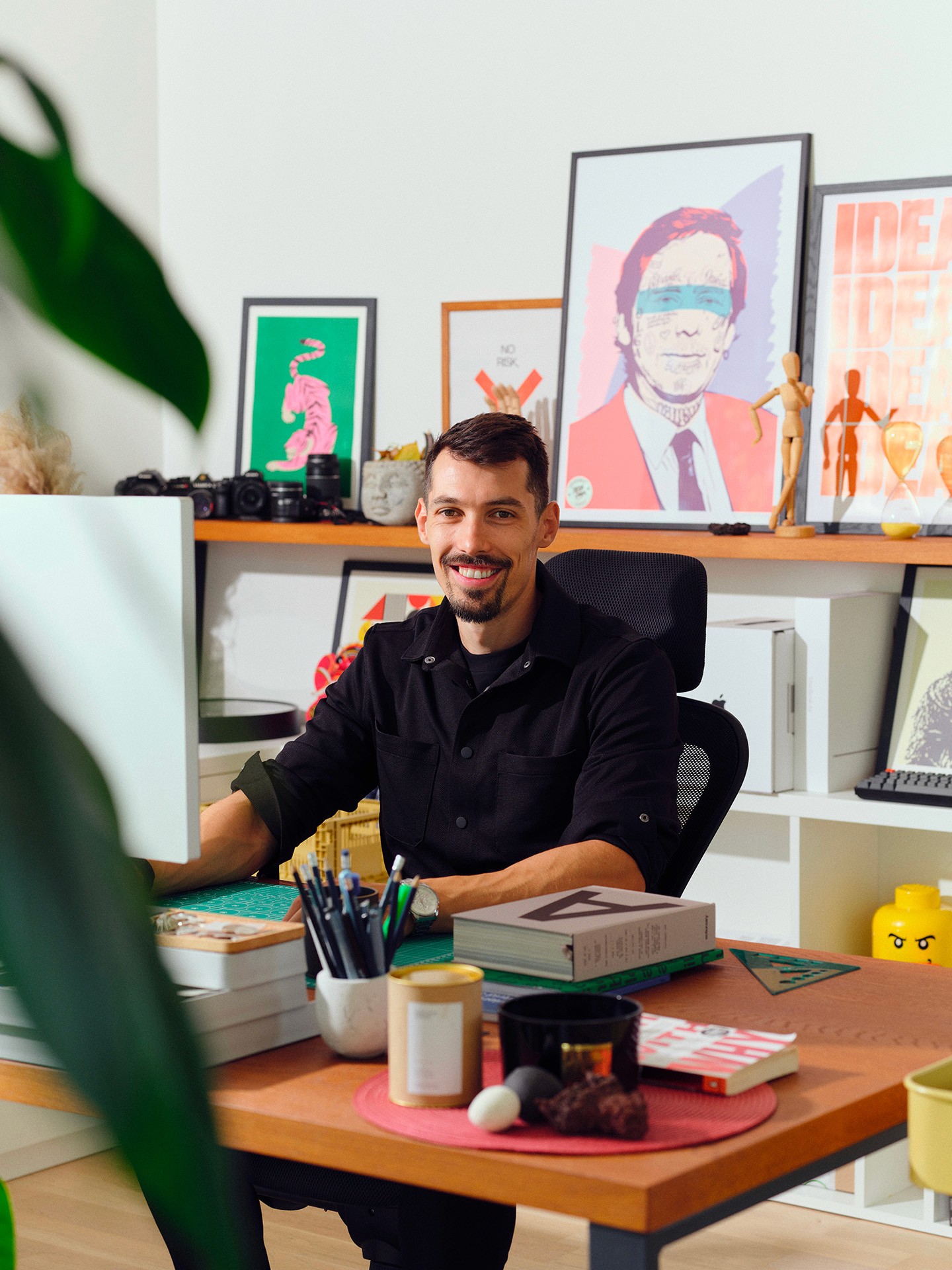
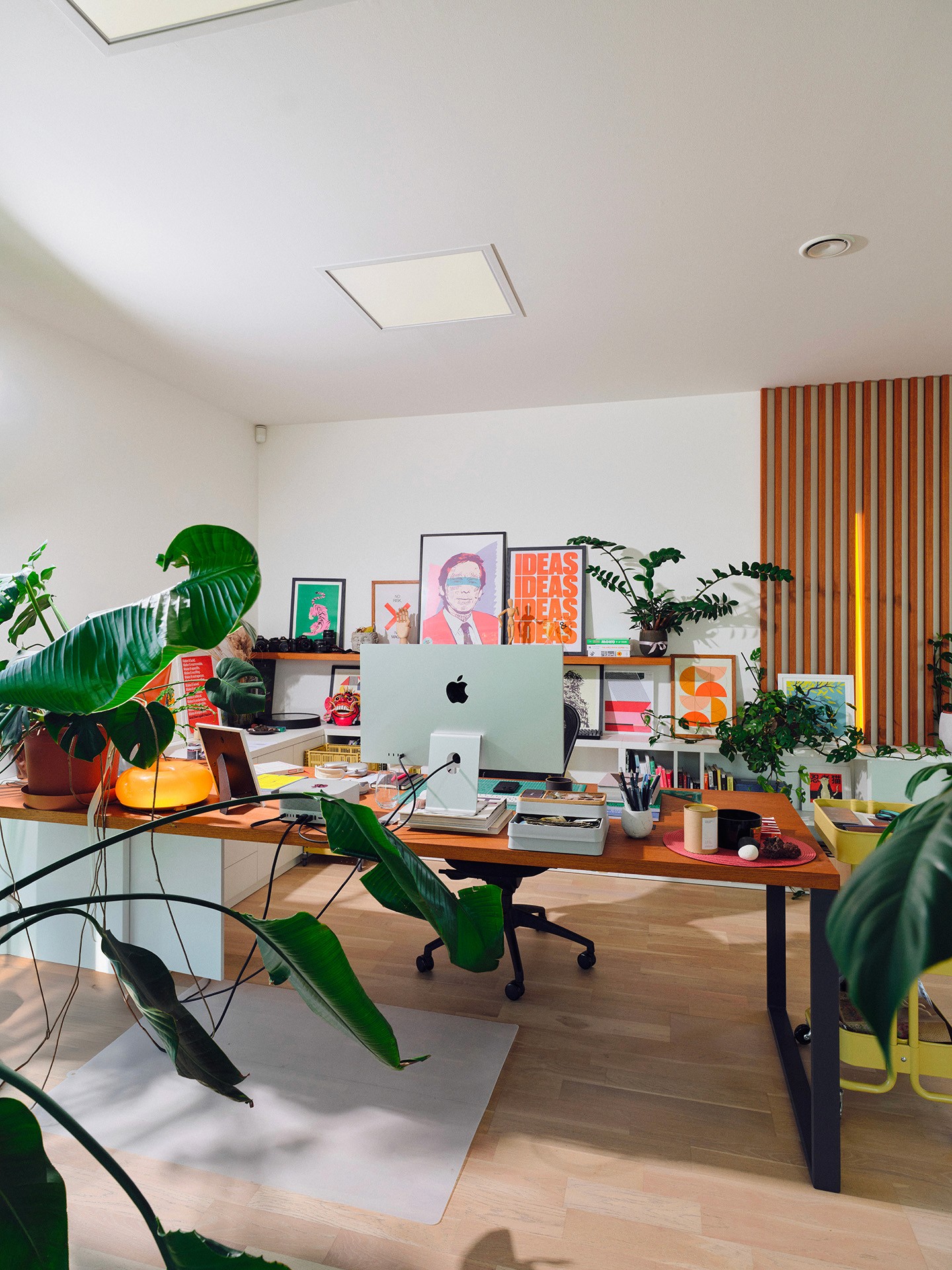
When I later started designing my new house and the workspace within it, I realized that the place should represent me. It should reflect what’s going on inside my head to be creative, alive, and filled with visually interesting things that hold value for me.
From the wood and custom-made furniture to the objects I keep there, everything has a connection to me. Whether it’s boxes from things I’ve bought, souvenirs from my travels, or artworks I collect. The entire space is essentially a glimpse into my mind. And the fifty-plus houseplants? They give it character and a soul.
Tady je překlad další části rozhovoru. Držel jsem se tónu, který je profesionální, ale zároveň upřímný a "craft-focused".
Do you project your values into your space as well? And has the move away from a minimalist environment changed your work and your approach to it?
Definitely. Earlier in my career, my design was all about consistency and precision. Everything had to be perfectly lined up, everything in its place, everything connected. But as I gain more experience, I’m finding that it’s exactly this 'organized chaos' the layers, textures, and elements of the real world that gives design its depth and aesthetic.
It makes the design feel alive rather than flat. And exactly what I’ve done with my office, I’m trying to bring into my work. I want my designs to have layers, depth, and personality. It’s a bit of a return to my roots to the time when I was creating in Photoshop. It’s no longer pure minimalism, even though I still love grids, structure, and clear systems. I’m just adding more life to them."
How does having your own dedicated workspace affect you? Do you ever switch up the places you work from?
Good question. I haven't noticed that the environment I’m currently working in has a major impact on how I work. I’m practically able to work anywhere, from an airport in New York to my own office. All I need is an internet connection, good coffee, and my headphones.
On the other hand, I occasionally need to recharge my creative batteries. And that means changing my environment not necessarily the workspace itself, but the surroundings I’m in. Going to the forest, into nature, or traveling to another country. That’s what recharges me. It doesn’t always happen instantly, but later, when I’m back at my computer, I can feel that it’s working.
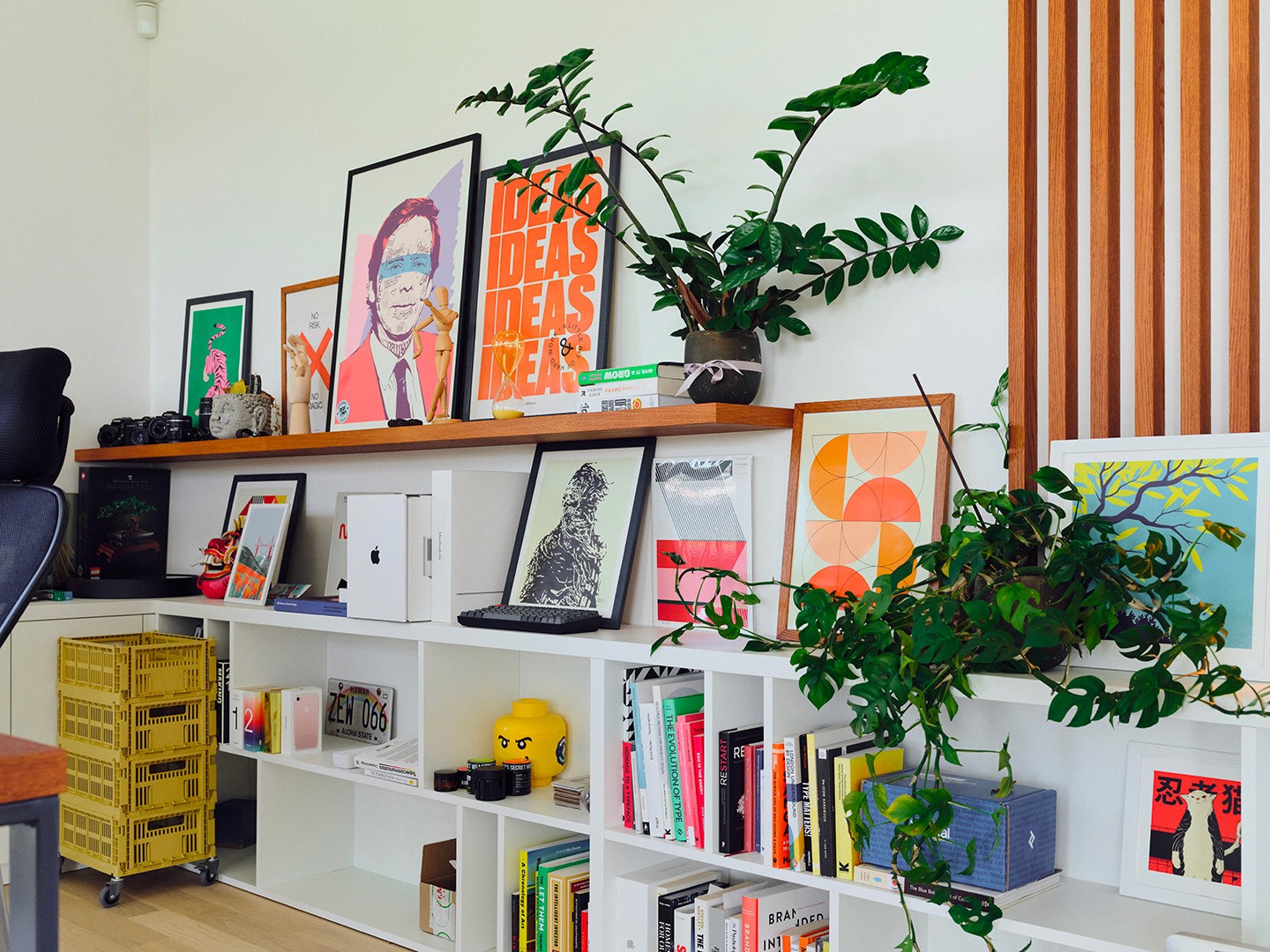
We see plants, books, and art everywhere around here… How do these objects influence your inspiration and creative process?
Let me go back to the books. For a long time, I lived with the belief that I was dyslexic and that I simply couldn’t read. I treated books more as decoration than something I actually consumed. It wasn’t until later that I realized the problem wasn't me it was that no one had given me books I actually enjoyed.
Once I discovered topics that interested me, I started reading heavily and regularly. Now, I try to dedicate at least half an hour to reading every day. So, books are no longer just a visual accessory; they’re a real source of inspiration.
As for the space itself, I need it to feel inviting. Not sterile, but comfortable. I surround myself only with high-quality things that hold meaning whether they are gifts, relics from my travels, or objects that inspire me visually. I’d rather wait and buy one high-quality piece than forty average ones. I’m inspired by quality, industrial design, and objects that have a soul.
Where do you draw inspiration for the look of your space? Do you have any iconic or personal favorite items that you were missing on your desk before?
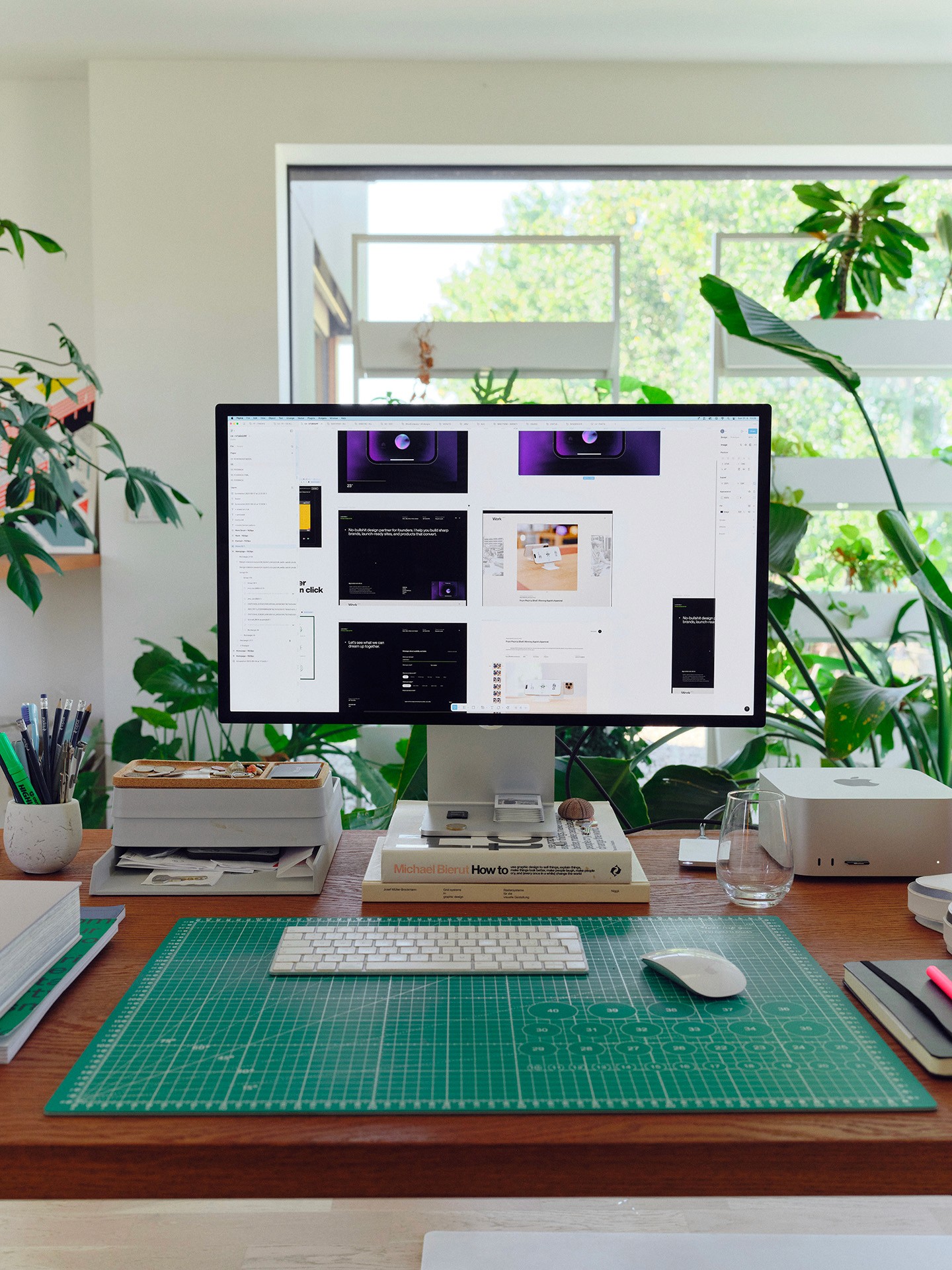
This space evolved gradually, hand in hand with the design of the entire house. In the beginning, it was just a completely empty white room only that white desk I brought over from my previous office.
However, certain elements were set from the start mainly the materials and colors. The wood that dominates this room is used throughout the house and even on the facade. I value consistency and don't want to mix dozens of different materials.
The rest I fine-tune as I go, following my intuition. Sometimes I add something, other times I take it away. I draw inspiration from Pinterest or Instagram, but I always adapt it to my own taste. I have objects here that mean something to me gifts, travel finds, or design pieces that simply bring me joy.
It’s a long-term process, a living organism of sorts. It might never be truly finished, and that’s exactly where the magic lies. It’s an endless project.
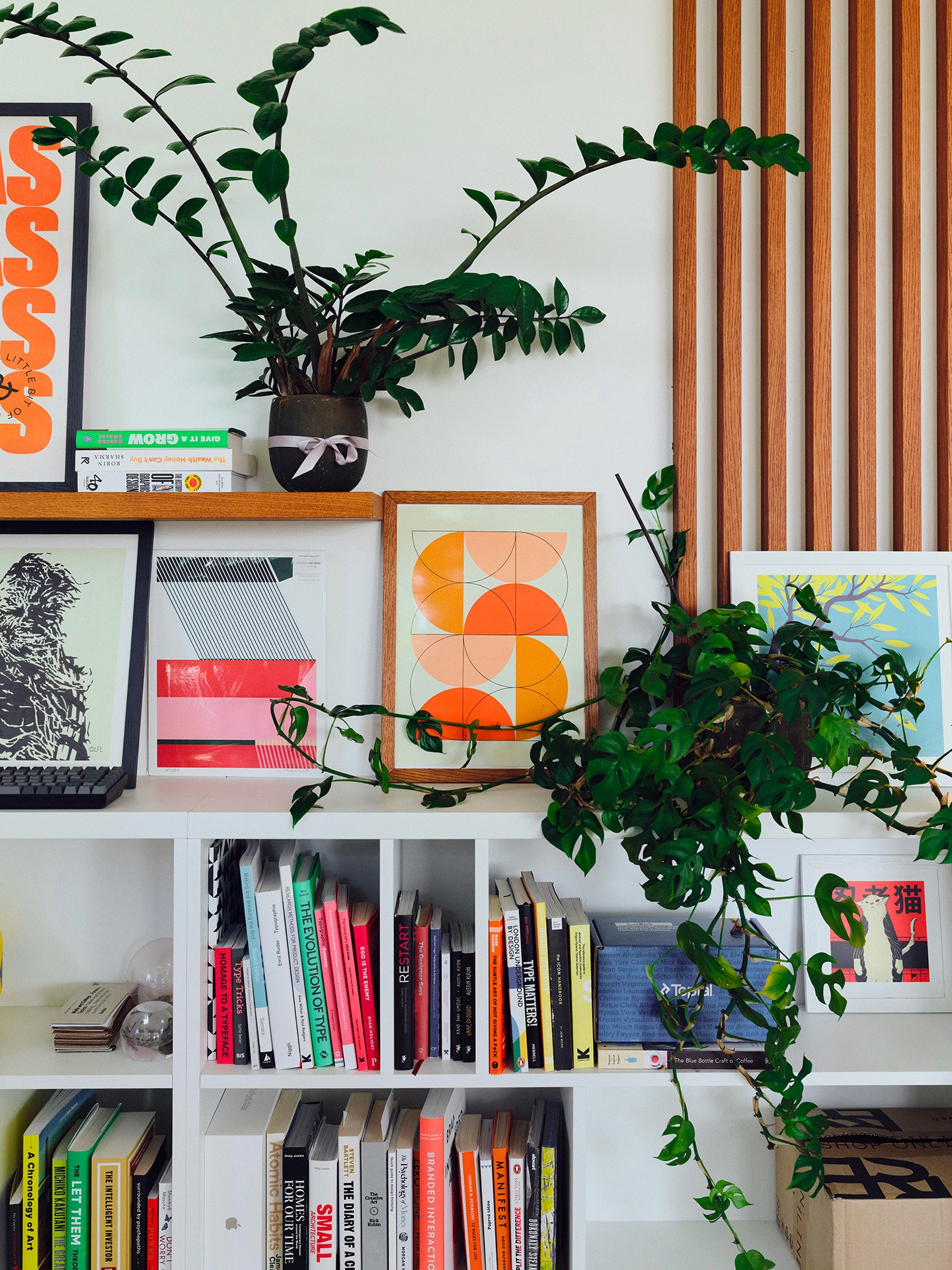
Your space isn't perfectly ordered, yet it feels harmonious and intentional. How do you find the balance between chaos and order when you work?
Exactly. It’s no longer about wanting everything aligned at right angles. It’s more about the space having its own order one that makes sense primarily to me. It’s a bit like looking inside my head: there are a lot of things, colors, and ideas happening at once, but each has its place and a reason for being there.
I take the same approach to my workspace. The space is here for me, not the other way around. I want it to inspire me and make me feel good. And when I bring someone else here, I don’t want them to feel like they’re in an office; I want them to feel at home to have a coffee, sit down, and just talk about business and life.
That’s the vibe I want everyone who visits to feel, not just me.
Do you have any tips for other designers setting up their own space for work and creativity?
"That’s an interesting question. In my opinion, it’s mostly about creating a space for yourself, not for others. Just because you see a 'perfect' office online doesn’t mean it will work for you. Buying the same acoustic panels or IKEA pegboards isn't an automatic solution.
Try to build it so that it’s truly yours. Make the space authentic and unique. I believe authenticity itself is becoming a major trend—but above all, you need to feel good in it.
Take it slow. Feel free to sketch it out, plan it, or consult with an expert. And if you find that something isn’t working, don’t be afraid to start over. Remove whatever is holding you back and iterate. In essence, it’s the same as digital design: a process of exploration, searching, and constant fine-tuning."